The Art of the Right Price – Why Overpricing Is a Seller’s Biggest Risk
When listing your home, it is entirely natural to want to walk away with the absolute highest figure possible. Your home is not just a collection of square footage; it is a sanctuary where you have invested years of memories, hard work, and capital. However, in a real estate market defined by heightened buyer selectivity and stable, flat price growth, letting sentimentality drive your list price is an incredibly dangerous financial gamble.
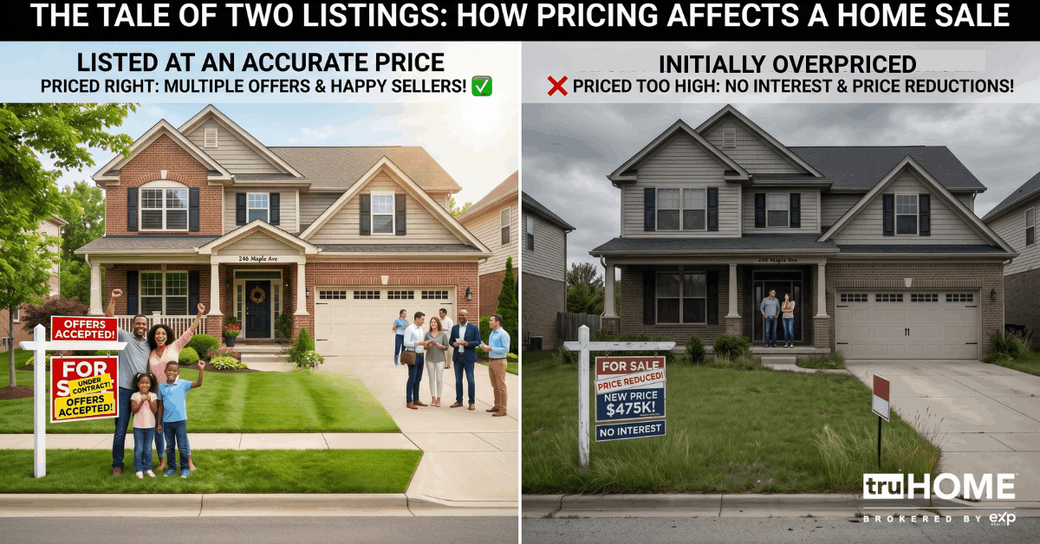
We are currently operating in a highly sensitive pricing ecosystem. Buyers are facing elevated monthly carrying costs due to persistent mortgage rates. This means their purchasing power is strictly capped, and they are shopping with a degree of mathematical discipline we haven't seen in years. When a property hits the market with an unrealistic, speculative price tag, it triggers a predictable, negative chain reaction that ultimately costs the seller time and money.
Aggressive Overpricing ──> Low Initial Foot Traffic ──> Accumulating Days on Market
│
Final Under-Market Sale <── Lowball Opportunistic Offers <── Public Price Reductions
The first 14 days a property is active on the market are its most valuable. This is when the automated alerts go out to active buyers, when local real estate agents preview the home for their clients, and when enthusiasm is at an absolute peak. When a home is priced accurately, it captures this initial wave of concentrated attention, often yielding strong, clean offers.
If a home is overpriced, however, that crucial initial window is completely wasted. Buyers see the figure, calculate the projected monthly payment, realize it does not align with current comparable sales, and simply filter it out of their search parameters. The property becomes stagnant.
As a listing accumulates "Days on Market" (DOM), its perceived value begins to erode. Once a property passes the average market duration—which currently sits around 52 days nationally—buyers and buyer agents start asking a dangerous question: “What is wrong with this house?” Even if the home is structurally immaculate and beautifully designed, the market assumes a hidden defect exists purely because it hasn’t sold.
To break this stagnation, the seller is eventually forced to execute a public price reduction. Data consistently demonstrates that homes undergoing price cuts often end up selling for less than they would have if they had been priced correctly from the very beginning. The initial overpricing chases away the serious, qualified buyers, leaving the listing vulnerable to opportunistic buyers who wait out the timeline to submit lowball offers.
Avoiding this trap requires moving away from guesswork and looking directly at local market data. At truHOME, our proprietary valuation methodology analyzes three distinct pillars of local market data to establish a competitive price:
- True Comparables: We look at closed transactions within your immediate geographic radius over the past 60 to 90 days, adjusting carefully for exact finishes, lot topography, and structural differences.
- Active Competition: We evaluate the homes currently competing for the same pool of buyers in your price tier, mapping out how your home stands up visually and structurally.
- Pending Ratios: We measure how quickly homes are going under contract in your neighborhood to accurately gauge current local demand.
Pricing your home correctly from day one does not mean leaving money on the table. It means positioning your property to create an immediate sense of value, protecting your listing's vital momentum, and compelling serious buyers to act decisively before someone else beats them to it.
Get Your Accurate Value: Ready to see what your home is worth in today's realigned market? Skip the generic automated valuation tools and get a precise, human-vetted market analysis. Visit truHOME to launch your selling strategy.
Categories
Recent Posts