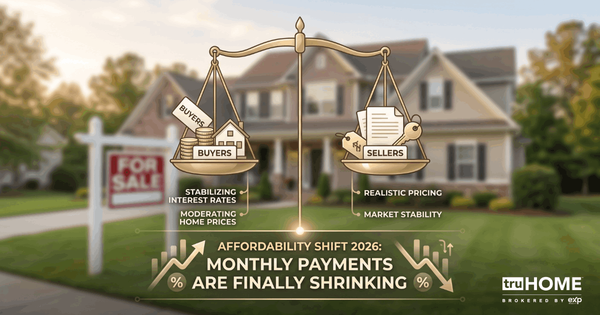
Navigating the Rebalanced Market – The Truth About Housing Trends

The real estate market is officially undergoing a grand rebalancing. If you have been keeping an eye on national headlines, you might feel a bit of whiplash. Some sources claim the market is cooling rapidly, while others point to resilient home values. The reality on the ground is far more nuanced: we have entered an era of profound market normalization.
For the past several years, sellers held nearly all the cards, driven by historically low inventory and unprecedented buyer competition. Today, the dynamic has shifted. According to recent data from the National Association of Realtors (NAR), housing inventory levels have improved significantly, sitting nearly 20% higher than the severe supply droughts of previous years. This influx of choices means the frantic multiple-offer environments that defined the pandemic era have mostly dissipated. Buyers are no longer feeling forced to make rushed, high-stakes decisions within hours of a property hitting the market. Instead, they are taking their time, evaluating options, and prioritizing homes that offer genuine utility and long-term structural value.
Despite this increase in options, home prices are not experiencing a dramatic collapse. Economists observe that national home price growth has moderated to a flat, sustainable pace, roughly matching baseline inflation. This is actually a welcoming development for the health of the broader economy. It allows wage growth to steadily catch up with housing costs, gradually restoring purchasing power to everyday consumers.
However, this national stability masks a highly localized polarization. The housing market is no longer a monolithic entity; it is a tale of highly distinct regional micro-markets. For example, parts of the Northeast corridor and manufacturing hubs in the Midwest continue to show robust price acceleration due to tight regional supplies and steady job growth. Conversely, select regions across the Sun Belt and the West Coast—which experienced a massive surge in pandemic-era construction—are seeing inventory accumulate more rapidly, giving buyers substantial room to negotiate price cuts and closing incentives.
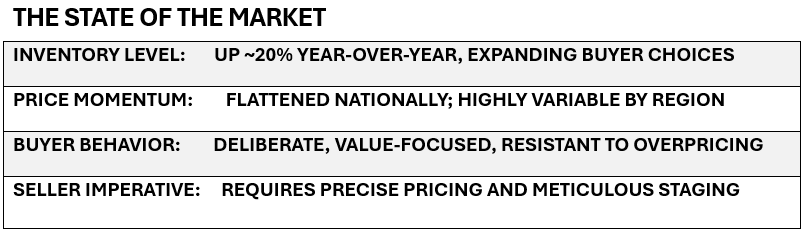
For sellers, this transformed landscape rewards precision. The days of listing a property in any condition, slapping an aggressive price tag on it, and waiting for a bidding war are firmly in the rearview mirror. Today’s buyers are highly sensitive to affordability barriers, driven primarily by mortgage rates sticking above the 6.5% mark. When a home is overpriced, it loses its initial market momentum, sits on the active listings chart, and eventually requires a public price reduction—a scenario that can signal distress to savvy shoppers. Sellers must lean heavily on local data, pricing their homes accurately from day one and ensuring the property’s presentation is flawless.
For buyers, this environment represents the most balanced playing field encountered in nearly a decade. While borrowing costs remain a significant consideration, the power to negotiate terms, request repairs, and include standard contingencies has returned. The key to success in this market is removing emotion from the equation and focusing entirely on hyper-local data.
At truHOME, we don’t look at broad national trends to dictate your local strategy; we analyze the exact blocks, school districts, and inventory metrics driving your specific neighborhood. Whether you are looking to maximize the equity built up in your current property or carefully timing your next purchase, having an expert advisory team by your side is what turns market shifts into personal financial opportunities.
Your Next Move: Don't let generalized headlines dictate your real estate timeline. Connect with a dedicated advisor today by visiting truHOME to receive a customized, hyper-local analysis of your neighborhood's true market value.

Categories
Recent Posts